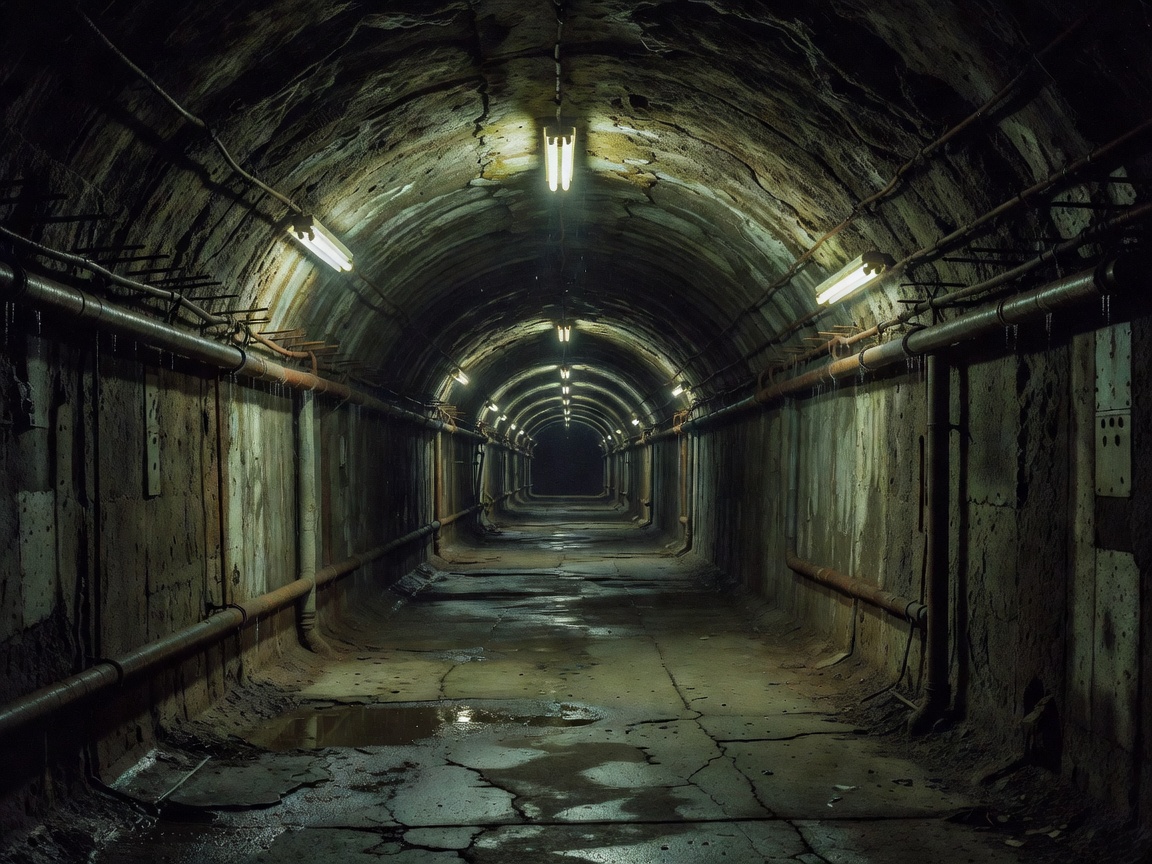
Deep beneath the bustling streets of Qianmen in Beijing lies Dixia Cheng (地下城), literally "The Underground City." Spanning over 85 square kilometers between 8 to 18 meters beneath the surface, this monumental complex was constructed between 1969 and 1979 during the height of Sino-Soviet border tensions.
Commissioned by Chairman Mao Zedong under the national slogan "Dig tunnels deep, store grain everywhere, and never seek hegemony," the facility was designed to shelter up to 6 million citizens in the event of nuclear or conventional bombardment.
Key Dossier Facts
- Construction Era: 1969–1979 (Built by hand by over 300,000 civilians).
- Footprint: ~85 sq km covering main municipal hubs of Beijing.
- Amenities Included: Cinemas, roller skating rinks, silk factories, restaurants, and grain silos.
- Current Access: Official entrance near Qianmen closed for ongoing urban redevelopment.
A Subterranean Parallel World
Dixia Cheng was not merely a series of raw concrete storm tunnels. It was envisioned as a fully autonomous backup metropolis. Over 300,000 local residents, including school students, participated in excavating soil and reinforced walls by hand using shovels and bamboo baskets.
The tunnels linked direct escape routes to major landmarks, government buildings, Tiananmen Square, and the Western Hills military garrisons outside the city center. Key sectors featured air filtration systems, water wells, hospital wings, and mushroom farming quarters.
Modern Re-adaptation
During the 1990s and 2000s, portions of Dixia Cheng were repurposed into commercial space, hostels, underground shopping markets, and tourist passageways. Today, large swathes remain closed to the public, functioning as dormant structural utilities or converted storage facilities for modern municipal workers.
For official geographic archives on Beijing municipal history, refer to Beijing Official Municipal Portal.